
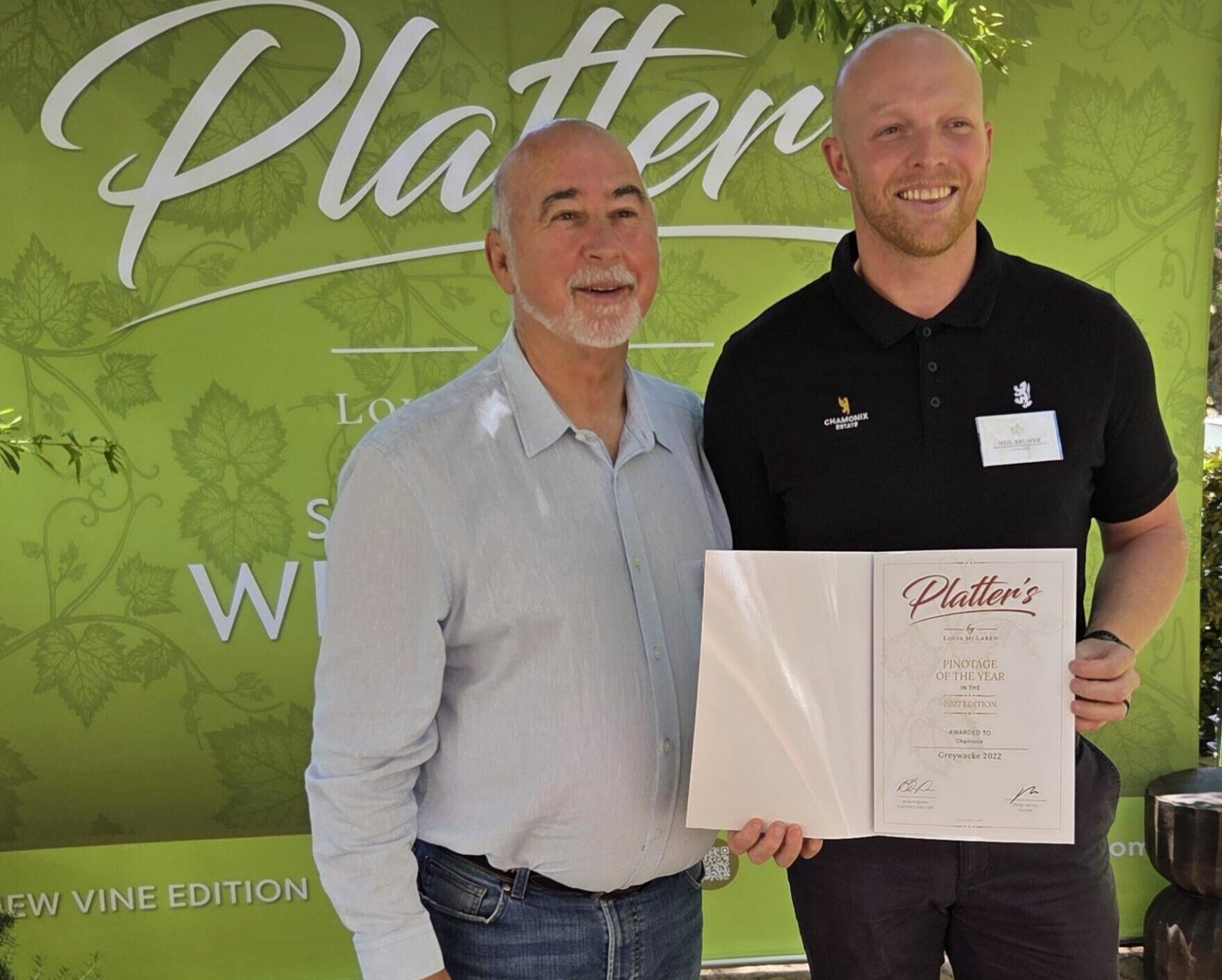
Chamonix Estate has secured one of the South African wine industry’s most prestigious accolades, with its Greywacke Pinotage 2022 named Platter’s Pinotage of the Year in the 2027 edition of the Platter’s Guide to South African Wine.
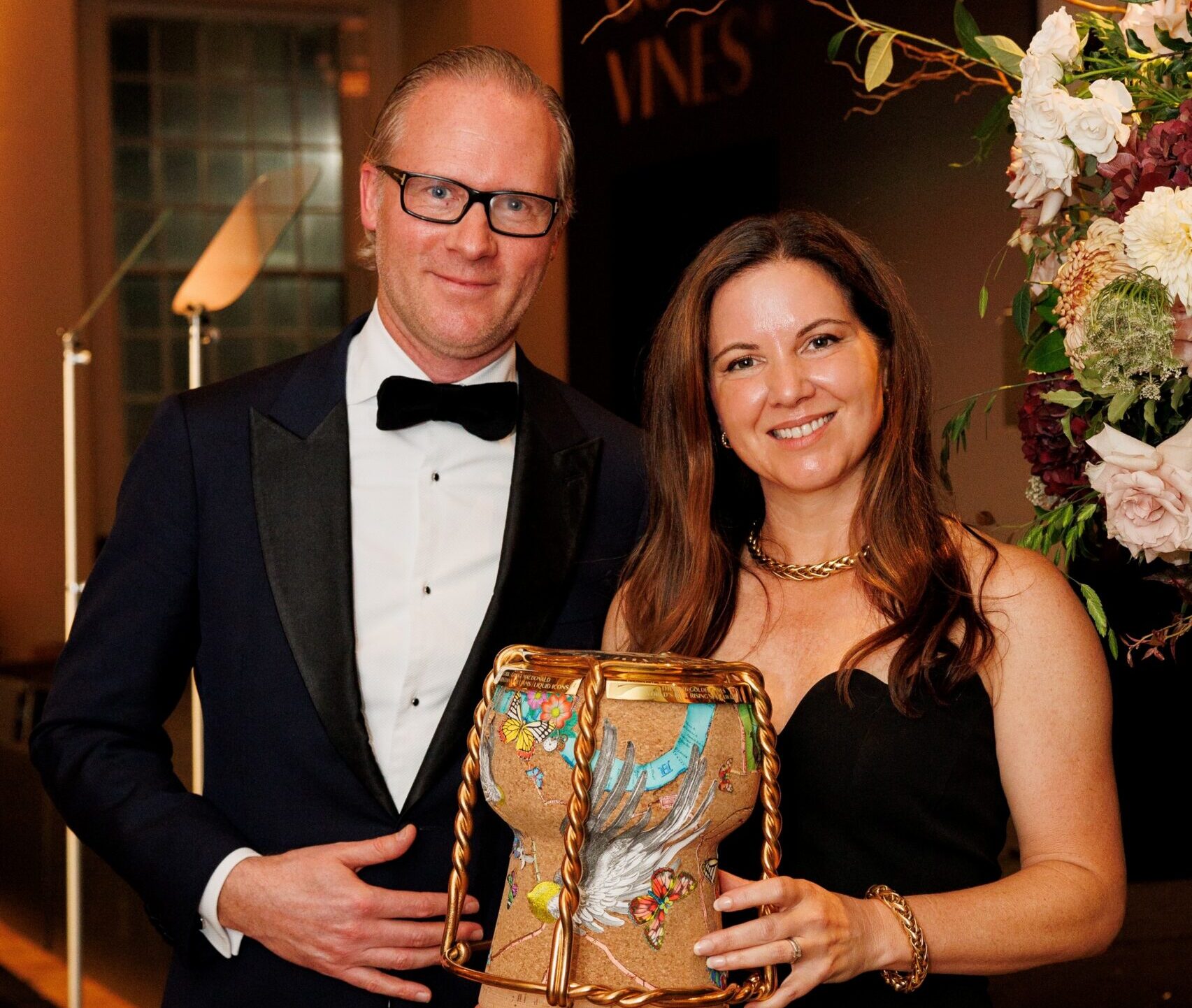
The Franschhoek estate’s achievement puts it at the forefront of this year’s Pinotage selections, while further recognition came for its Chamonix Blanc de Blancs Cap Classique, which earned a coveted five-star rating. In the Platter’s Guide, five stars are reserved for wines scoring 95 points or more.

For Chamonix winemaker Neil Bruwer, the recognition is particularly meaningful given the standing of the annual guide within the local wine industry.
“To have a wine adjudged as worthy of five stars in the Platter’s Guide is seen in the wine community as a major achievement. But to have a wine selected as a Platter’s Wine of the Year is one of the ultimate recognitions a winery can hope for,” he says.
“Both myself and the Chamonix teams in the cellar and the vineyard are truly honoured to receive the award for Platter’s Pinotage of the Year. I think this is a truly significant achievement, as Pinotage is a variety driving South Africa’s global reputation as a wine nation.
“The competition in the Platter’s Pinotage category is notoriously intense, with esteemed producers from regions more famous for Pinotage than Franschhoek vying for recognition. For Chamonix to come out on top is especially significant in acknowledging our quality proposition and represents a momentous milestone in our wine history.”
The award-winning Greywacke Pinotage takes its name from the estate’s distinctive greywacke soils, characterised by weathered, dark sandstone formed from ancient marine sediments. These stony, free-draining soils retain little water and remain relatively cool, encouraging deep root systems and naturally moderating vine vigour.
The resulting growing conditions contribute to wines with structure and freshness, allowing the fruit to be supported by a distinctive mineral character rather than excessive weight.
Bruwer says the winemaking philosophy is centred on preserving these characteristics while allowing the fruit to develop complexity and elegance.
“In vinifying the superb quality grapes from this Pinotage vineyard, the Chamonix cellar’s approach is to rein things in, allowing enough time to draw the nuances and elegance from the fruit towards a complete wine,” he explains.
Following harvesting and berry sorting, the grapes undergo extended maceration and a long, slow, temperature-controlled fermentation, with a total of 14 days of skin contact.
“Pinotage is known as a quick, warm fermenter, and in the cellar we adjust the cooling during fermentation to extend the whole process, as I believe this does justice to the grapes and expresses the unique terroir.”
During fermentation, the wine receives twice-daily pump-overs and punch-downs before spending 24 months maturing in French oak barrels, 10% of which are new.
While refinement and elegance remain central to Chamonix’s approach to Pinotage, Bruwer believes the variety should retain something of its distinctly South African character.
“Like many Pinotage producers, Chamonix strives for refinement and elegance in our wines made from this unique grape variety. But we also believe that, as a home-bred South African cultivar, the end product should ideally express a bit of wilderness, sun and power.
“These characteristics not only show Pinotage’s undoubtedly robust character, but are also part of our country’s identity. We thank Platter’s for recognising this.”
Beyond its Pinotage success, Chamonix achieved further strong results in the 2027 guide, with three wines receiving four-and-a-half-star ratings after scoring 94 points each. They are the Old Vine Steen 2025, Chardonnay Reserve 2024 and Premier White 2024, a Sauvignon Blanc and Semillon blend.
The results underline the estate’s continued commitment to quality across its portfolio, with this year’s Pinotage of the Year award providing a particularly notable endorsement of Franschhoek’s ability to produce outstanding examples of South Africa’s signature red grape variety.
Leave a Reply