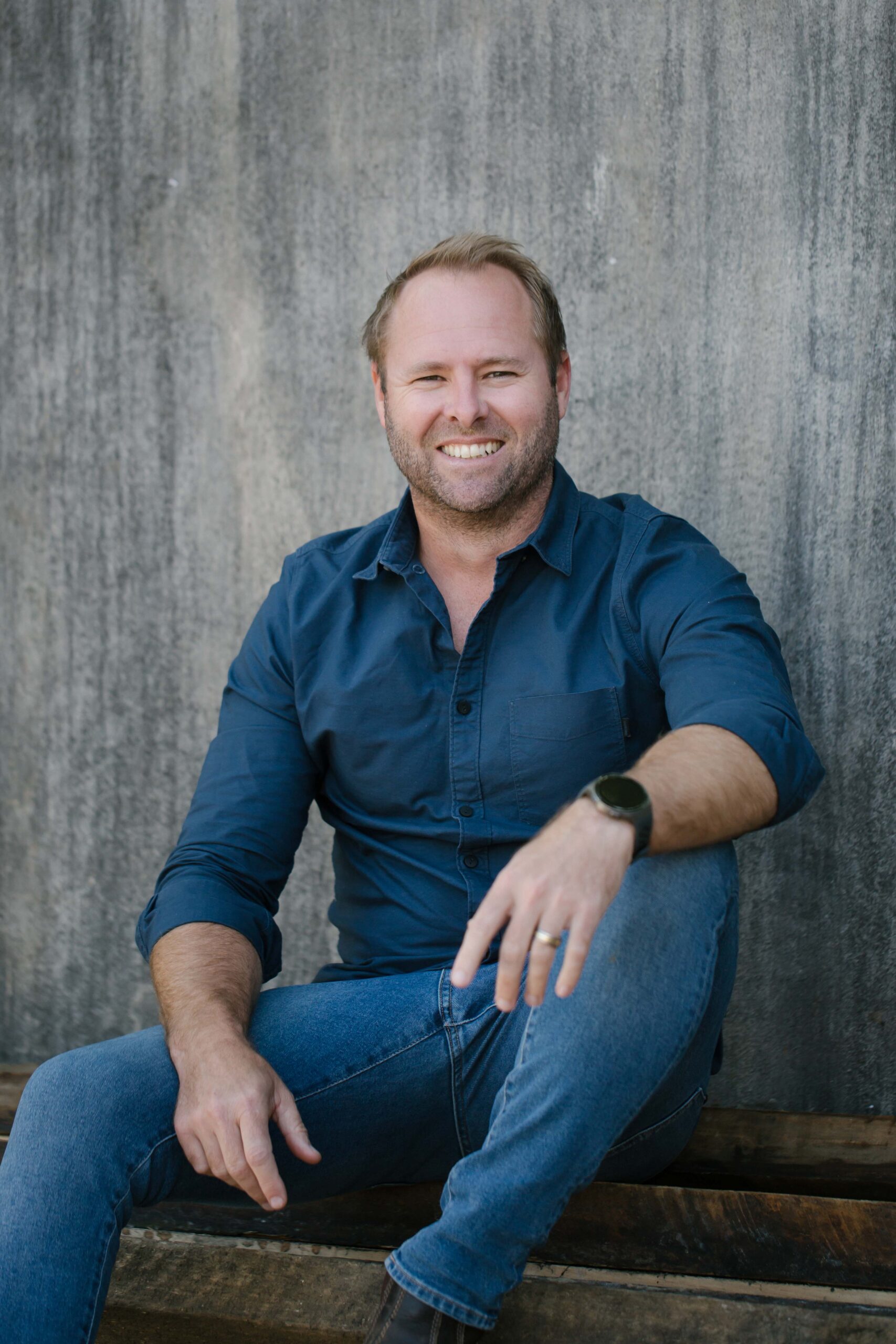
For two decades, Henning Retief has quietly shaped the vineyards behind one of South Africa’s most respected wine brands. As viticulturist at Kleine Zalze Wines, his work has unfolded not in boardrooms or headlines, but block by block, slope by slope, season by season.
There is a moment in every harvest, he says, when you simply know. Not because of a spreadsheet or a lab result, but because the vineyard signals its readiness. “We go when the grapes are calling,” Henning explains — a philosophy built on instinct honed over 20 years of hands-on experience.
Henning joined the Stellenbosch estate in 2006 and has played an integral role in its evolution from a family-run farm into an internationally recognised brand, with wines enjoyed from Cape Town to Stockholm. Today, Kleine Zalze forms part of the portfolio of French wine group Advini, yet the heart of its success remains rooted in the vineyards.
Agriculture has always been part of Henning’s story. With family roots in the Swartland’s sheep-farming country and parents who grew up on farms, he spent school holidays driving tractors and helping with harvests. Raised in Strand and Somerset West, he absorbed the rhythms of the wine industry from an early age. “Agriculture and vineyards have always been part of me,” he says.
After early experience at Annandale Wine Farm under the legendary Hempies du Toit, and time spent working in Robertson, Henning first encountered Kleine Zalze during harvest in 1999. “I saw it when it was nothing,” he recalls. Parts of the property had no roads or houses at the time. By the time he returned permanently in 2006, the farm was entering a new chapter of growth — one he has helped guide ever since.
Today, Henning oversees a sourcing network of approximately 60 producers. Around 90% of the fruit is sourced from Stellenbosch, complemented by carefully selected vineyards in Durbanville, Darling and Piekenierskloof. Managing a portfolio of this scale requires more than technical expertise; it demands long-term, trust-based relationships with growers.
“You need open, honest partnerships,” he says. “I look for producers who are willing to adapt, evolve and strive for excellence — people who are committed to the wine journey.”
Central to his approach is a deep respect for site expression. Every slope, soil type and aspect presents unique potential. Matching cultivar to site is, for Henning, both science and craft. Planting the wrong grape in the wrong place, he believes, limits quality before a single bottle is produced.
The viticultural calendar is demanding. Pruning runs from June through August, followed by intensive canopy and vineyard management in spring. During harvest, Henning is present in the blocks themselves, monitoring sugar levels and phenolic ripeness plot by plot, making nuanced decisions shaped by experience. “You cannot replace core fundamentals,” he says. “Technology can support them, but it cannot replace them.”
Innovation, however, has always been part of Kleine Zalze’s journey. The estate was among the first in Stellenbosch to adopt metal vine poles at scale, enabling greater efficiency in vineyard management and harvesting. Yet for Henning, progress never comes at the expense of fundamentals. “Doing the basics exceptionally well is the key to success,” he says.
The 2026 harvest arrived approximately three weeks earlier than anticipated, with Shiraz ripening two weeks ahead of the previous year. Henning had anticipated the shift and was ready to act — a testament to his close observation and understanding of seasonal patterns.
Asked which cultivars currently excite him most, he points to Grenache, Cinsault and Cabernet Sauvignon, and admits a particular enjoyment of Chenin Blanc. But it is Alvarinho — the elegant Portuguese white grape — that truly captures his imagination. Working with just a handful of producers, he describes it as “scarce, distinctive and full of potential.”
After 20 years, Henning’s legacy is deeply woven into the fabric of Kleine Zalze. His institutional knowledge, long-standing grower relationships and intimate understanding of the vineyards cannot be replicated overnight. He credits his longevity to the people and the environment — values that mirror his own preference for authenticity over acclaim.
He may not be the loudest voice in the room, but his impact resonates in every bottle. When a Kleine Zalze wine delivers purity of fruit and a clear sense of place, there is a strong chance that Henning Retief stood in that vineyard long before harvest, asking the right questions, listening carefully — and waiting for the grapes to call.