Chief insights from Nederburg’s vintage 2023 underscore wines characterized by exceptional flavor profiles, elevated acidity, and below-average alcohol content, as conveyed by cellar-master Samuel Viljoen. His remarks came following the conclusion of the final harvest phase, just prior to the Easter hiatus.
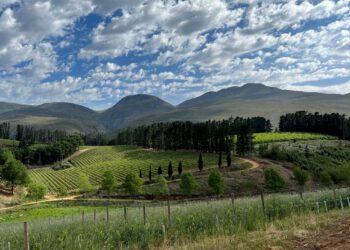
Viljoen elucidated, “The period leading up to the harvest witnessed generally cooler temperatures, fostering gradual and consistent flavor maturation with impressive concentration and well-balanced acidity. Despite a few brief but intense heatwaves in February and March, the overall climate remained temperate, with the addition of significantly cooler nighttime temperatures.”
He emphasized the convergence of these favorable climatic conditions, bolstered by the effects of regenerative farming initiatives that enhance vine resilience against changing climates, and meticulous canopy management. These factors jointly contributed to the production of fully ripe fruit at lower sugar levels. The grapes were optimally harvested around 23° Balling, with certain instances showing a 0.5% to 1% reduction in alcohol content.
Nederburg’s viticulturist, Isabel Teubes, noted a slight reduction in crop yields compared to the previous year, a trend mirrored across most Cape growers during this vintage. She indicated an anticipated 6% overall decline compared to the prior year’s yield, a pattern consistent with Nederburg’s own crop size.
Teubes highlighted the beneficial impact of substantial December rainfall in mitigating the effects of a dry winter and spring. This proved especially advantageous for dryland vineyards, ensuring their health up to the point of harvest. Additional rains in March further benefited later-ripening red varieties, which still adorned the vines. While whites had already been harvested, the lingering reds profited from favorable soil moisture levels.
The industry’s consensus echoed the exceptional quality of this year’s harvest. Viljoen characterized this vintage as a “Goldilocks” one, featuring phenolic ripening at reduced sugar levels, harmoniously balanced acidity, and vibrant flavors. The unique temperature fluctuations between day and night significantly bolstered color intensity for reds. The small berry size positively influenced the skin-to-fruit ratio and resulted in well-ripened tannins.
Teubes acknowledged the resourcefulness of non-irrigated growers in overcoming challenges posed by load shedding. They adeptly managed constant interruptions in irrigation schedules. Notably, the winery remained unaffected, a result of strategic solar panel and generator installations.
Viljoen underscored the benefits of the steady and consistent ripening pace, which facilitated a smoother logistical process. Access to power in the cellars played a pivotal role, enabling precise ferment control. The employment of whole-bunch and submerged cap fermentation techniques for red wines imparted vibrant fruit characteristics and supple tannins, particularly promising for age-worthy Cabernet Sauvignon and other red varietals.
Nederburg’s whites, notably Sauvignon Blanc and Chardonnay, are distinguished by their exceptional fruit purity. In summation, Viljoen expressed great enthusiasm for vintage 2023, affirming its promise of outstanding wines.