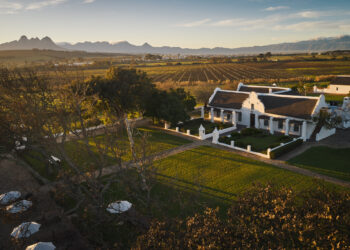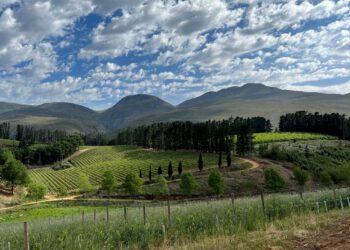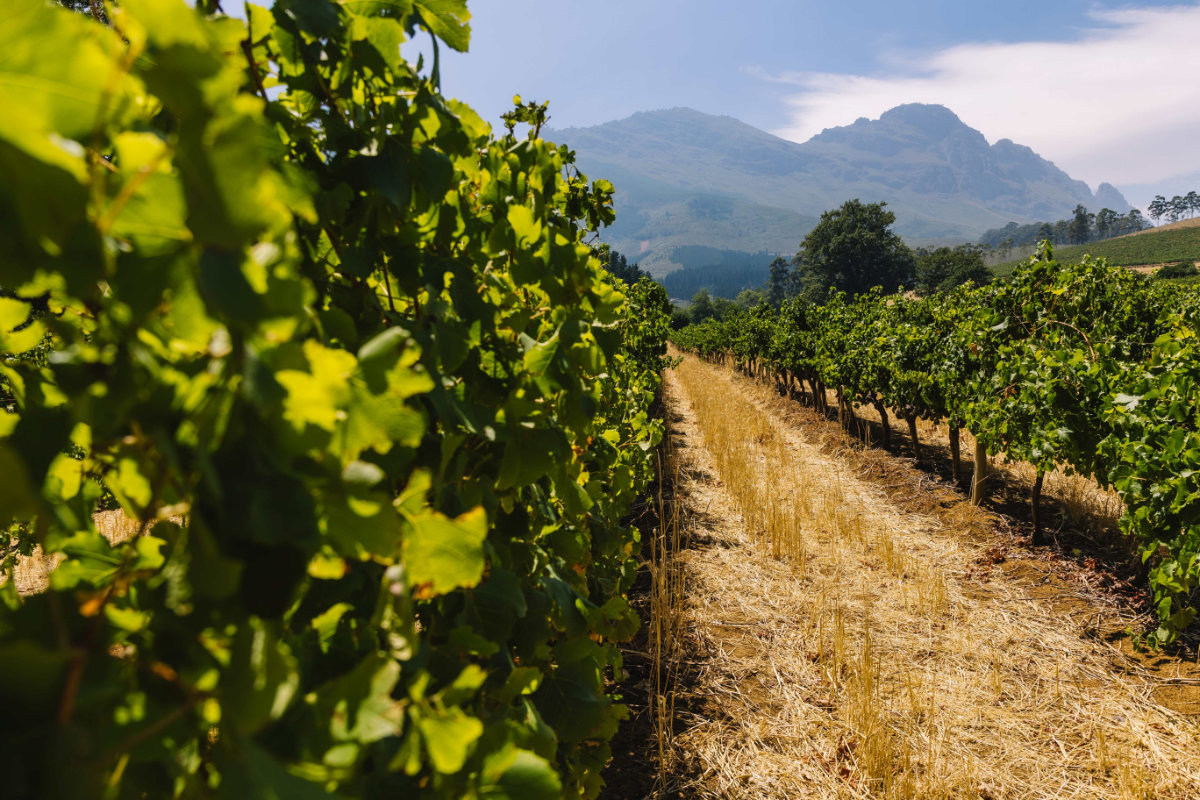
If the 2026 grape harvest at Delheim Estate can be defined by one characteristic, it is abundance. Generosity in the vineyards has translated into healthy vines, impressive yields and promising quality — not the careless kind of abundance, but the kind that follows a season where most things fall neatly into place and the vineyards quietly exceed expectations.
The growing season followed a winter that did exactly what it needed to do. Despite a few dramatic rainfall events that created the impression of a particularly wet winter, overall precipitation was modest. Importantly, water reserves remained healthy, dams stayed full, and the vines entered spring in a deep and settled dormancy.
“We had proper cold units during the winter of 2025, allowing the vines to go into a state of proper shutdown,” says cellarmaster Roelof Lotriet. “That even, deep dormancy made a huge difference when the vines woke up in spring. Budburst was uniform, and from there the season progressed in an orderly way.”
One of the season’s quiet gifts was the weather during flowering. The Simonsberg region of Stellenbosch is no stranger to strong winds at that time of year, yet the 2026 season proved unusually calm. The result was exceptional fruit set across varieties.
December brought the expected heat, but without extremes. Ripening began early before slowing and evening out, allowing sugar accumulation and flavour development to progress in tandem.
“The vines never felt pushed,” says winemaker Nongcebo Langa. “They stayed in balance, which is exactly what you want in a warm year.”
By harvest, the numbers were striking. Chardonnay blocks that would typically deliver around ten tonnes produced nearly four times that amount. Sauvignon Blanc, Pinotage and the red varieties also recorded higher yields, although less dramatically so.
A late-season rain event brought up to 40 mm of rain in parts of the farm, but caused little concern. Delheim’s sloped vineyards shed water quickly, and there was no meaningful berry splitting or disease pressure.
In the cellar, fermentations have been steady and precise. Sauvignon Blanc has stood out early, showing particularly expressive aromatics and a freshness that belies the size of the crop.
“It’s more intense than last year at the same stage,” notes Lotriet. “There’s real flavour concentration there, and we’re seeing the same in the other white wines.”
Pinotage once again demonstrated its mercurial character. The window between harvesting grapes for Delheim’s well-known rosé and picking fully ripe fruit for the red wine remained narrow, as always, but was perfectly timed.
“That’s one of Pinotage’s strengths here,” says Langa. “You can pick fruit early for fresh, aromatic rosé and then still achieve real depth from grapes harvested a few days later for the red Pinotage.”
Some questions remain for the future. Younger vineyard blocks carried heavier crops than ideal and will be monitored carefully to ensure vine health is not compromised in the long term. Mature vineyards, however, have taken the higher yields comfortably in their stride.
What the 2026 vintage challenges is the long-held assumption that low yields are necessary for quality. At Delheim, established vines with deep root systems and sufficient reserves have ripened large crops fully and evenly, without sacrificing flavour, chemistry or structure.
Early tastings point to wines with vibrant natural acidity, clarity of fruit and, in the reds, firm but balanced tannins.
“There’s structure, but also ease,” says Lotriet. “Nothing feels forced. Beyond the varietal character in the young wines, we’re also seeing a clear expression of Delheim’s Simonsberg terroir. That sense of authenticity and place is increasingly important in today’s wine world.”
Adding a touch of wilderness to the harvest, Cape leopards have also made their presence felt this season. Paw prints and scat have been spotted in the vineyards during the early mornings before picking begins, a reminder of the remarkable natural environment in which Delheim’s vines grow.
As the final grapes arrive in the cellar, the 2026 vintage is shaping up as one defined not only by scale, but by confidence — confidence in the vineyards, in the season, and in the knowledge that abundance and excellence need not be mutually exclusive.
A fitting vintage for one of Stellenbosch’s most respected wine estates.